Legal B2
¡Objeción, señoría!
Objection, Your Honor!
B2 · Español legal · Juego de audienciaB2 · Legal Spanish · Courtroom game
En esta claseIn this lesson
Al final podrás reconocer seis objeciones al vuelo y pedirle algo al juez con «solicito que + subjuntivo».By the end, you'll spot six objections on the fly and ask the judge for something with «solicito que + subjunctive».
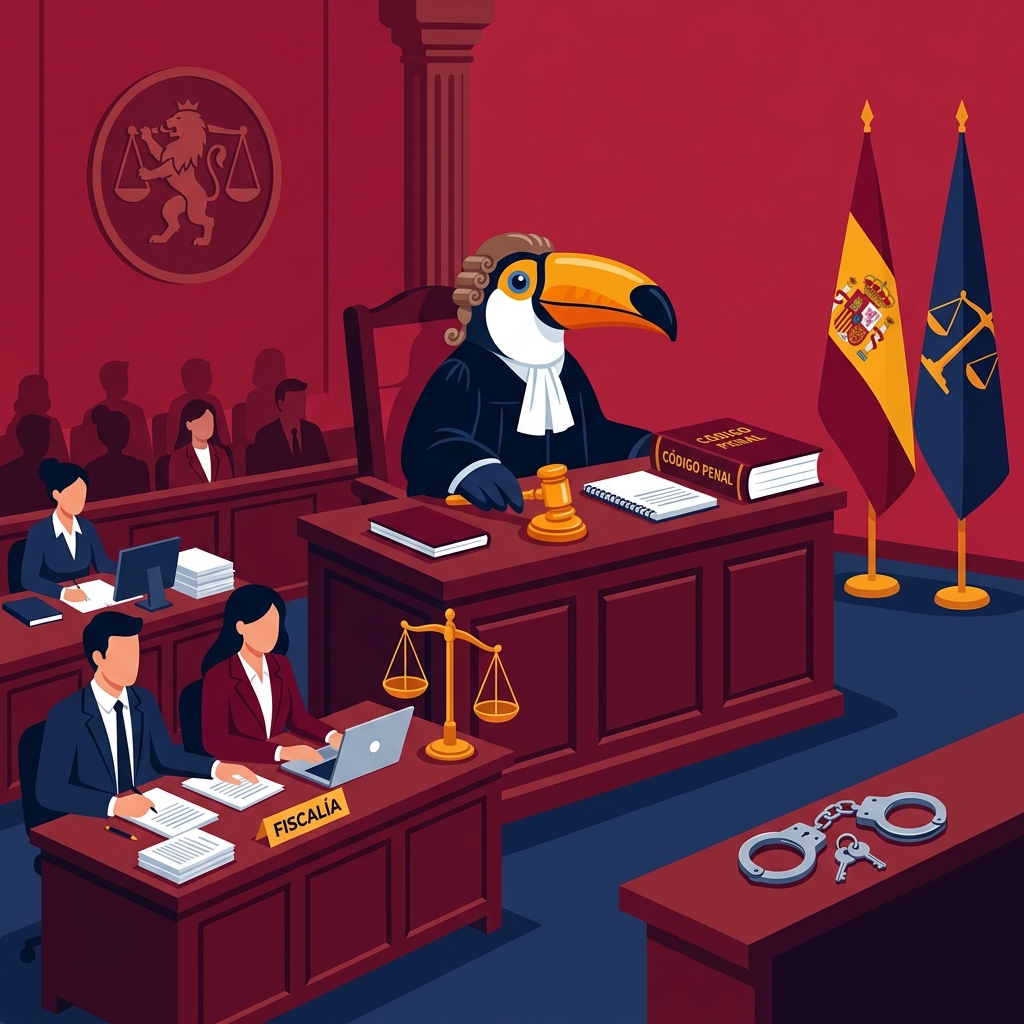
Tú eres el árbitro de las preguntas: lees la transcripción de una audiencia y decides si cada pregunta del fiscal merece una objeción. Nadie actúa un personaje.You are the referee of the questions: you read a hearing transcript and decide whether each of the prosecutor's questions deserves an objection. Nobody plays a character.
Ronda de ejemploSample round
FiscalProsecutor
«El acusado estaba borracho, ¿verdad?»
«Objeción, señoría: pregunta sugestiva. Solicito que el fiscal reformule la pregunta.»
Juez:Judge: «Ha lugar. Reformule, señor fiscal.»
En el interrogatorio directo, el fiscal no le dicta la respuesta a su testigo.On direct examination, the prosecutor doesn't hand the answer to the witness.
Abierta: pasaOpen: it's fine
Empieza con qué, cómo, dónde, cuándo, quién. El testigo cuenta con sus palabras.Starts with what, how, where, when, who. The witness tells it in their own words.
Sugestiva: objeciónLeading: objection
Ya trae la respuesta y busca un «sí»: ¿verdad?, ¿no?, ¿cierto?, ¿no es así?It already carries the answer and fishes for a "yes": right?, isn't it?, correct?
In English: igual que en EE. UU., la pregunta sugestiva sí se permite en el contrainterrogatorio. En este juego todo es interrogatorio directo.just like in the US, leading questions are allowed on cross-examination. In this game everything is direct examination.
Sugestiva · leading
La pregunta ya trae la respuesta.The question already carries the answer.
Capciosa · compound / misleading
Mete dos preguntas en una o da por hecho algo que nadie ha probado.It packs two questions into one, or assumes something nobody has proven.
Impertinente · irrelevant
No tiene relación con los hechos del caso.It has nothing to do with the facts of the case.
Los ejemplos de «impertinente» lo son en un caso de robo: en otro caso, la misma pregunta podría ser pertinente.The "irrelevant" examples are irrelevant in a theft case: in another case, the same question could be relevant.
Repetitiva · asked and answered
El testigo ya respondió esa pregunta.The witness already answered that question.
Especulativa · calls for speculation
Pide adivinar lo que pensaba otra persona o lo que habría pasado.It asks to guess what someone else was thinking or what would have happened.
De referencia · hearsay
El testigo repite lo que le contó otra persona que no está en la sala.The witness repeats what someone who isn't in court told them.
En Colombia se habla de prueba de referencia o de testigo de oídas. Si el testigo oyó algo él mismo, directamente, no es de referencia.In Colombia it's called prueba de referencia or testigo de oídas. If the witness heard something directly, firsthand, it's not hearsay.
Una objeción tiene tres partes: la palabra, el motivo y lo que le pides al juez. Lo que pides va con que + subjuntivo, como en los consejos legales del módulo 2.An objection has three parts: the word, the ground and what you ask the judge for. What you ask for goes with que + subjunctive, as in the legal advice of module 2.
Objeción, señoría: pregunta sugestiva. Solicito que el fiscal reformule.
In English: I ask that the prosecutor rephrase: el inglés formal también usa una forma especial (sin «s»). En español es el subjuntivo.I ask that the prosecutor rephrase: formal English also uses a special form (no "s"). In Spanish, that's the subjunctive.
Ha lugar
sustained
El juez acepta la objeción: la pregunta no se responde.The judge accepts the objection: the question isn't answered.
No ha lugar
overruled
El juez rechaza la objeción: el testigo responde.The judge rejects the objection: the witness answers.
In English: sustained = ha lugar · overruled = no ha lugar. Ojo: «ha lugar» no dice quién gana el juicio, solo si la objeción procede.sustained = ha lugar · overruled = no ha lugar. Careful: «ha lugar» doesn't say who wins the trial, only whether the objection stands.
Objeción, señoría: [motivo]. Solicito que + subjuntivo.
Ha lugar (sustained) · No ha lugar (overruled)
El juez dijo «ha lugar». Escribe la pregunta abierta que el fiscal debería hacer y dila en voz alta. Empieza con qué, cómo, dónde, cuándo o quién.The judge said «ha lugar». Write the open question the prosecutor should ask and say it out loud. Start with qué, cómo, dónde, cuándo or quién.
Hay más de una respuesta buena: vale cualquier pregunta abierta que no traiga la respuesta.There's more than one good answer: any open question that doesn't carry the answer works.
Del módulo 6: si + pluscuamperfecto de subjuntivo (hubiera + participio) → condicional compuesto (habría + participio). Toca la forma correcta.From module 6: si + past perfect subjunctive (hubiera + participle) → conditional perfect (habría + participle). Tap the right form.
Rondas 2 y 3 · máximo 17 puntosRounds 2 and 3 · maximum 17 points
Reformula (modelos)Rephrase (models)
Repaso relámpagoQuick review
También valen las formas en -iese (hubiese anotado, hubiese objetado).The -iese forms also work (hubiese anotado, hubiese objetado).
Free 20-minute level assessment
Hi, I’m Camilo, a Colombian lawyer. I made this lesson. In a free 20-minute call I’ll check your level and show you exactly how to start speaking. No pressure, no commitment.
Private 1-on-1 or small groups from $15/session · See plans & pricing

Sigue practicando español para el juzgadoKeep practicing courtroom Spanish Gratis y sin registrarteFree, no sign-up